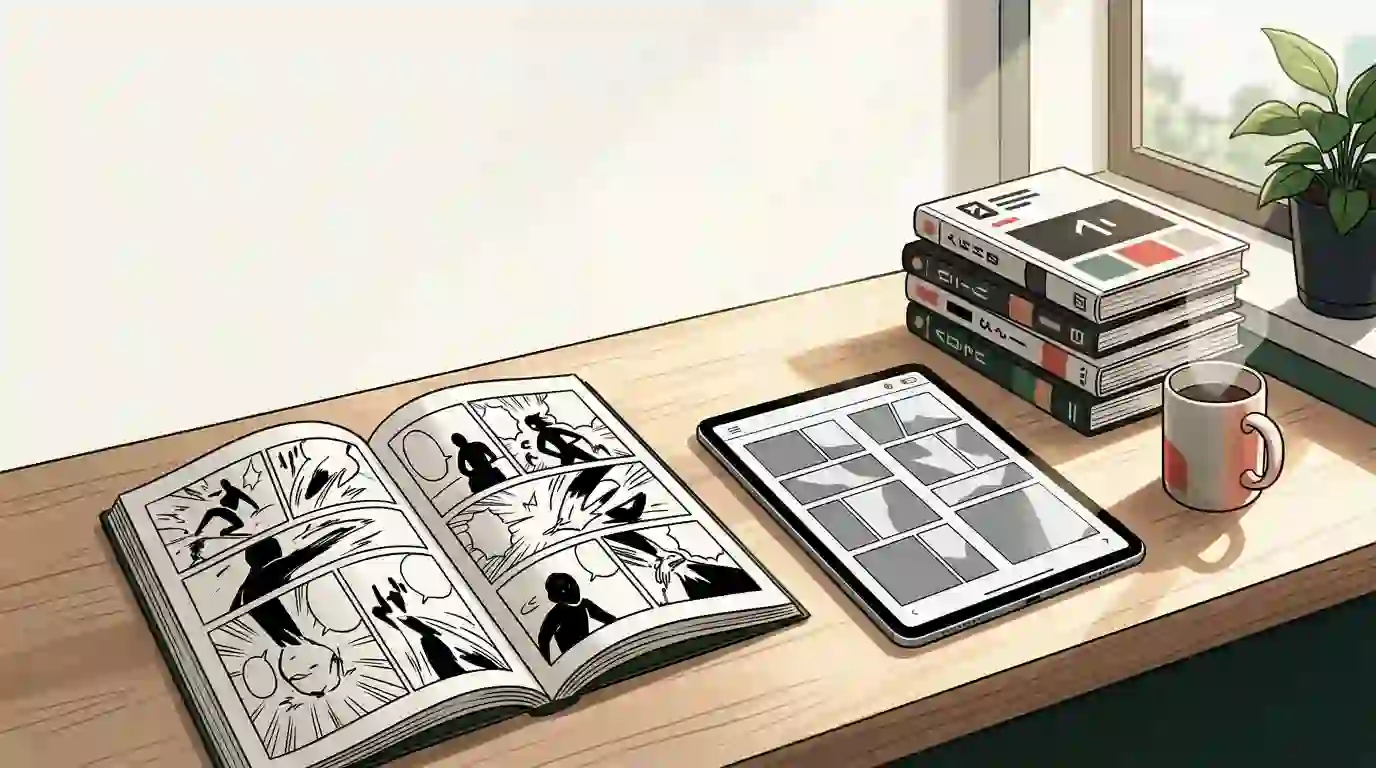
If you have searched for mangaread, you may be looking for a simple place to start a manga, catch up on a favorite series, or find chapters without risking your device or personal data. The confusing part is that search results can mix licensed readers, digital bookstores, fan communities, and sites with unclear permission. This guide explains how to choose a legal source, find a series that fits you, read comfortably, and support the people who make manga.
MangaRead at a glance: what does the search term mean?
People who wish to read manga online frequently use the search term “mangaread.” It does not, by itself, identify one publisher, official app, or licensed website. Before entering an email address, downloading an app, or opening a chapter, check who operates the service and whether it identifies its publishers or licensing partners.
Japanese comics and graphic narrative are known as manga. Readers usually follow panels from right to left in Japanese-style editions, though some localized editions may be arranged differently. The safest approach is to follow the page’s own reading instructions rather than assume every edition uses the same layout.
Quick answer: Choose a reader or bookstore that names its publisher, provides clear terms and privacy information, and explains how it sells or provides chapters. If a site gives no meaningful information about who owns or licenses its content, choose another source.
Chapter-by-chapter guide
Use this roadmap to jump to the answer you need. Each section covers a practical question, so the page works as both a beginner’s introduction and a checklist for experienced readers.
| Chapter | What you’ll learn | Best for |
|---|---|---|
| MangaRead at a glance | What the search term means and how to check a site | Anyone starting a search |
| What manga is | Reading direction, panels, and common formats | New readers |
| Legal online reading | How to recognize licensed access | Readers comparing websites |
| Official platforms | How publisher-backed services and bookstores differ | Readers looking for a source |
| Choosing a series | How to match genre, length, and tone | Readers who feel overwhelmed |
| Finding chapters | How release schedules and editions work | Ongoing-series readers |
| Reading on a device | Screen, accessibility, and privacy tips | Phone, tablet, and desktop users |
| Safety checklist | Red flags, downloads, and account protection | Everyone |
| Supporting creators | Why official access matters and what else helps | Fans who want to contribute |
| FAQs | Short answers to common questions | Quick-answer seekers |
How do you read manga? What is it?
Manga covers many styles and audiences. It includes action, comedy, romance, mystery, sports, science fiction, slice of life, historical stories, and more. A category label can hint at the intended audience, but it does not tell you everything about a specific title’s themes or age suitability.
Many manga editions preserve the traditional right-to-left order. Start at the page marked “1” or follow the publisher’s reading guide. Within a page, read the panels in the direction shown by the edition. If the dialogue seems scrambled, check whether you opened the book at the correct end before deciding the translation is confusing.
You may encounter several formats:
- Digital chapter: A single installment, often released as part of an ongoing series.
- Collected volume: A book that gathers multiple chapters, sometimes with bonus material.
- Print edition: A physical paperback, hardcover, or magazine issue.
- Digital volume: A purchased or borrowed electronic book, usually read in an app or browser.
- Web manga: A series first published or distributed online, sometimes in a vertical-scroll format.
A series may appear in more than one format, and release timing can differ by country, language, and platform. Check the edition details when you want a particular translation or chapter.
Is it okay to read manga for free online?
Yes, there are legitimate ways to read some manga for free. Publishers and licensed services may offer sample chapters, selected installments, limited-time access, or free-to-read series. The exact offer depends on the title, region, service, and current terms. “Free” is not automatically a sign that a source is unauthorized, just as a polished design is not proof that a site has permission.
Look for clear signs of accountable distribution:
- The publisher or service identifies itself and provides contact or support information.
- The title page credits the publisher, creator, or licensed partners.
- The service explains whether chapters are free, purchased, subscription-based, or offered through a limited promotion.
- The app or website has understandable privacy, payment, and account terms.
- The platform’s official publisher website links to the reader, or the reader clearly names its publishing partners.
A site that hosts full chapters without explaining who operates it or how it obtained the work deserves caution. Avoid trying to bypass paywalls, access restrictions, or account controls. Copyright rules differ between countries, so this guide does not offer a legal ruling about a particular website. When in doubt, use a publisher’s own service or a retailer linked from the publisher.
Where can you read manga online officially?
Start with the publisher of the series. A publisher-backed service is often the clearest place to check for official chapters, while a licensed retailer may be the better choice for buying complete digital volumes. The catalog, language, payment model, and regional access can vary, so verify the title and terms in your own country.
Two examples illustrate how official options can differ:
| Option | What it is useful for | What to check |
|---|---|---|
| MANGA Plus by SHUEISHA | Shueisha’s official service for manga chapters; its listings show series and available installments | Whether your chosen series, language, and chapters are available in your region; current free-reading rules |
| Kodansha Reader Portal | Kodansha’s official discovery, preview, and digital-book destination | Available titles, purchase and reading conditions, supported language, and regional details |
| Publisher-linked digital retailer | Buying or collecting a specific digital volume | Edition, DRM or app requirements, device compatibility, and refund terms |
| Local library or bookshop | Borrowing or purchasing print and, where offered, digital editions | Local catalog, lending period, language, and stock |
MANGA Plus bills itself as the official manga reader for Shueisha. and lists current chapters on its service. Kodansha’s support center explains where to find its manga in print and ebook formats and how its Reader Portal works. See the official MANGA Plus updates page and Kodansha Support Center for current details.
Availability can change. A service that works for a reader in one country may show a different catalog, payment option, or chapter window elsewhere. If you are in Pakistan or another market outside a platform’s main service region, confirm access, supported payment methods, and the exact English or other-language edition before creating an account.
How do you choose the right manga series?
A good first series is one you are excited to open, not the one with the most online hype. Use a few simple filters to narrow the field:
- Pick a mood. Do you want a quick comedy, a tense mystery, a warm everyday story, or an adventure with a large cast?
- Check the genre and age guidance. Read the description and content notes. A genre label alone cannot guarantee a title is suitable for every reader.
- Choose a manageable length. A short completed series can feel less demanding than a long-running title with many volumes.
- Read the official preview. A sample shows the art, pacing, translation style, and tone better than a plot summary can.
- Check the release status. Decide whether you want a finished story or are happy to follow a series as new chapters arrive.
- Try more than one title. It is normal to stop reading a series that does not hold your interest.
If you are not sure where to begin, ask a librarian or bookseller for recommendations based on age, favorite films, games, or books. You can also search publisher catalogs by genre or audience category, then use the preview to make your own decision.
How can you find the right chapter or edition?
Search by the full series title and creator where possible. A short title may match several works, while a creator’s name can help distinguish adaptations, spin-offs, and similarly named series. Once you find the official listing, check the volume or chapter number, publication date, language, and whether the edition is complete or still releasing.
A simple tracking note prevents accidental spoilers and duplicate purchases. Record:
- Series title and creator
- Publisher or official service
- Last chapter or volume completed
- Language and edition
- Next release date, if the publisher lists one
Release calendars are not universal. A chapter may arrive first in one language or service, and a collected volume may appear later. Use the official series page for timing rather than relying on reposted dates or unverified social posts. If you read a physical volume and then switch to a digital edition, confirm where the chapter numbering starts; bonus stories or edition differences can shift the count.
How do you read manga comfortably on a phone, tablet, or computer?
The right screen depends on the art and your habits. A phone is convenient for short sessions, but small lettering can make detailed pages tiring. A tablet gives panels more room. A desktop browser can suit readers who prefer a larger display or want to use keyboard and accessibility tools.
Try these practical adjustments:
- Use the official page-turn or zoom controls instead of enlarging a low-quality screenshot.
- Set brightness for your room and take breaks during long sessions.
- Check whether the reader offers page-by-page and vertical-scroll modes.
- Use device text-size, screen-reader, or contrast features where available.
- Save only through the service’s built-in offline feature, if it provides one.
- Keep your app and operating system updated.
Some artwork relies on small details, so zooming can help, but repeated panning may interrupt the storytelling. If text becomes hard to read, try a larger screen or a print edition rather than pushing through eye strain.
How can you spot an unsafe or questionable manga site?
You should not need to accept suspicious downloads, browser extensions, or repeated redirects just to view a chapter. A site that pressures you to install an unknown file, enter payment details before explaining the service, or disable security settings is not worth the risk.
Use this quick safety checklist before signing up:
- Confirm the website address carefully; look for misspellings or strange extra words.
- Search the publisher’s official website for a link to the service.
- Read the privacy and payment terms before providing personal information.
- Avoid sharing passwords, one-time codes, or payment details through pop-ups.
- Do not install files from a chapter page or allow notifications you did not request.
- Use a unique password and enable multifactor authentication if offered.
- Leave if the page triggers repeated redirects, fake virus alerts, or forced downloads.
A browser’s security warning is a reason to stop and investigate, not to click through quickly. If you have already entered a password on a suspicious site, change it anywhere you reused it and review your account activity.
Why does official access matter to manga creators?
A manga chapter is the result of creative and publishing work: writing, illustration, lettering, translation, editing, printing or digital preparation, and distribution. Buying a volume or reading through an authorized service supports the official path through which that work reaches readers. Each service has its own business model, so check how it explains subscriptions, purchases, or free access.
Fans can show support in ways beyond a purchase. Recommend a series through its official listing, leave a thoughtful review where permitted, borrow through a legitimate library, attend a publisher event, or buy a print volume as a gift. These actions also help new readers discover the work without relying on copied scans or uncertain uploads.
If the official edition is not available in your language or country, you can still follow the publisher’s announcements, request a local edition through a bookseller, or support a creator’s other authorized releases. Availability gaps can be frustrating; using a source with clear permission keeps your reading choice aligned with the people who made the work.
What should a good manga-reading site offer?
A dependable reader should make the basics easy to understand. Readers should be able to identify the operator, browse titles, understand costs, find support, and control their accounts without decoding vague notices. Clear information matters as much as a large catalog.
Before choosing a long-term service, compare it against these criteria:
| Check | Why it matters | Question to ask |
|---|---|---|
| Publisher and licensing details | Helps you understand who distributes the work | Does the service identify the publisher or its licensing partners? |
| Catalog and language | Prevents paying for the wrong edition | Is my title available in the language I want? |
| Pricing and access model | Avoids surprises | Is this chapter free, rented, purchased, or included in a subscription? |
| Device support | Makes reading practical | Does it work on my phone, tablet, or browser? |
| Privacy and account controls | Protects personal data | Can I review the terms and manage my account? |
| Regional availability | Catalogs and payment methods differ | Can I access and pay for this service in my country? |
| Reading quality | Supports a comfortable experience | Are pages clear, legible, and easy to navigate? |
A service does not need every feature to be a good fit. Choose the option that offers your series in the right language, with terms and reading tools you understand.
Frequently asked questions about MangaRead
Is MangaRead an official manga app?
“Mangaread” can be a generic search phrase, not one verified company. Check the app publisher, licensing information, and official publisher links before using a service.
Can I read manga online for free legally?
Yes. Official publishers and licensed services may offer free chapters, previews, or limited promotions. Check the title page and current terms because free access varies by series and region.
Is it safe to read manga in a browser?
It can be, when you use a reputable publisher or licensed reader, keep your browser updated, and avoid suspicious downloads, pop-ups, and requests for unnecessary personal details.
How can I tell if a manga website is legitimate?
Look for an identifiable operator, clear support and privacy information, transparent pricing, named publishers or partners, and a link from the publisher’s official website. No single visual feature proves authorization.
Can I use official manga services in Pakistan?
Access depends on the service, title, language, and current regional terms. Check the official site or app from Pakistan and confirm catalog, payment options, and account requirements before subscribing or buying.
What is the best manga app for beginners?
There is no single best choice for every reader. Start with an official service that carries a title you want, offers a preview, works on your device, and clearly explains its costs and reading rules.
Start reading with a simple, safe plan
Finding a manga you love should feel exciting, not risky. Choose a genre, browse an official publisher or licensed catalog, read a sample, and check the language, chapter order, price, and regional terms before you settle in. Keep track of where you stop, protect your account, and give yourself permission to try another series if the first one is not a fit.
If you arrived here through a mangaread search, take one useful next step: pick a title, verify its official listing, and read the preview today. Then share the publisher’s page with a friend who might enjoy it too. A thoughtful recommendation helps good stories find new readers—and keeps the reading experience clear, comfortable, and creator-supportive.