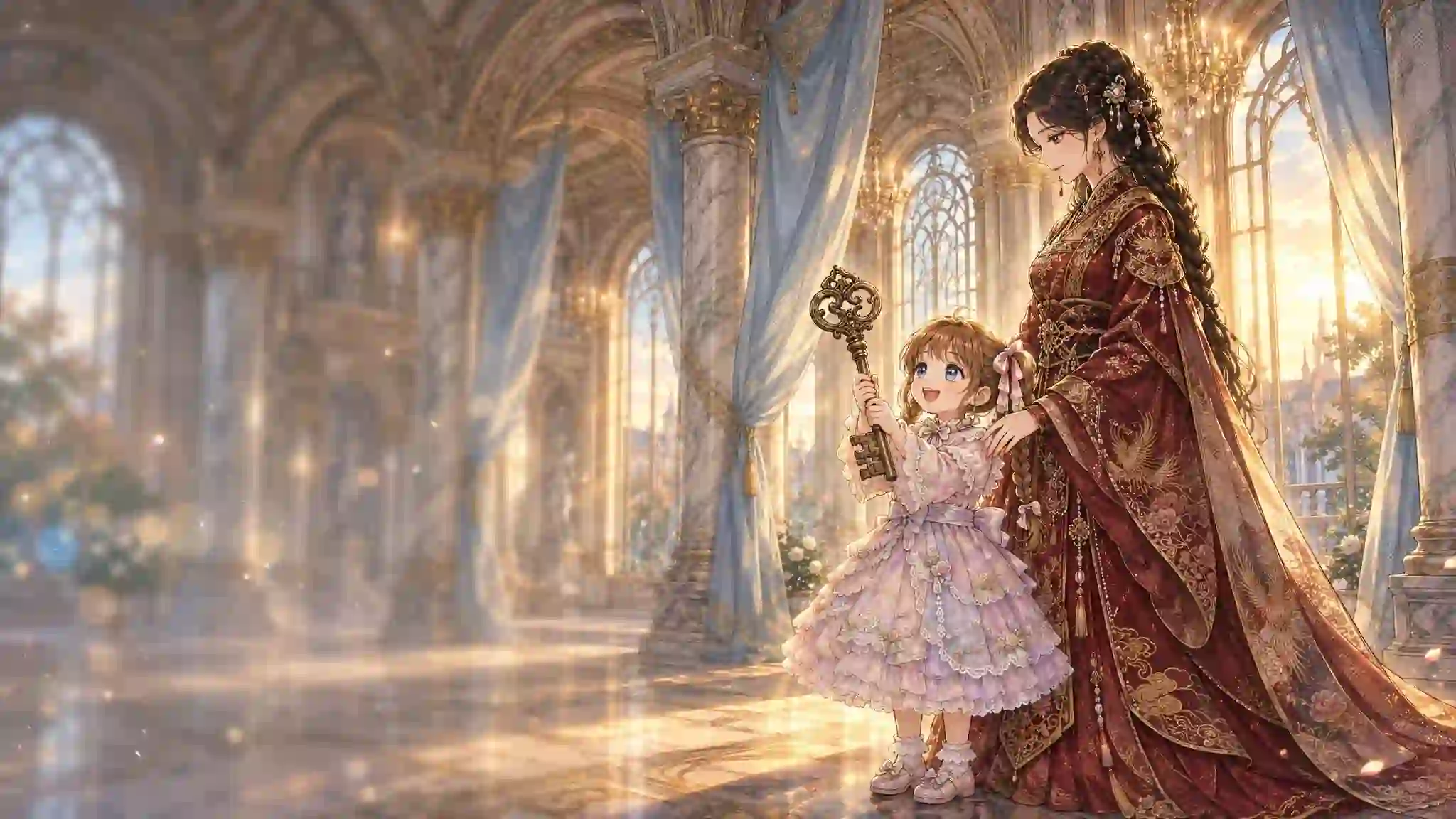
Recommendation posts keep calling it the sister in law of the heroine in a childcare story, yet nobody explains the title. Readers open chapter one, meet a princess who poisoned a child, and get lost in two family trees at once. That confusion ends here. This guide names every character, decodes the kinship term hiding in the title, maps the tropes, and shows you exactly how to read the series in order.
What Does “Sister in Law of the Heroine in a Childcare” Actually Mean?
Strip away the long title and you get one clean idea. A woman wakes up inside a childcare fantasy novel as a minor villain, and her new identity ties her to the heroine’s family by marriage. That marriage is the whole engine of the story.
Here is the quick answer, in plain language:
- The genre is childcare fantasy. The original story centers on a small child who needs protection, raising, and love.
- The heroine is Vivi. She is the beloved youngest daughter of the Castraine duchy, and readers meet her as a bright, talkative little girl.
- The “sister in law” is Titania. Titania is a princess who was engaged to the duchy’s heir at birth, which makes her Vivi’s future sister-in-law in the Korean sense of the word.
- The twist is consent. In the original novel, Titania poisons Vivi out of jealousy and dies ruined. In this version, she saves the child and tries to flee the plot entirely.
So the phrase describes a role, not a genre gimmick. A woman who should be the villain becomes the heroine’s protector, and the family that once hated her refuses to let her go.
If you searched for the sister in law of the heroine in a childcare series after seeing screenshots on TikTok or Instagram, this is the story you saw. It runs in Korean, carries an official Japanese edition, and reaches English readers through fan translations while the official English release stays quiet.
Quick Facts Table: Everything Verified in One Place
Facts change fast for an ongoing series, so treat this table as a snapshot. It reflects publisher listings and database records checked on October 14, 2026.
| Detail | Information |
|---|---|
| English title | Sister-in-Law of the Heroine in a Childcare Novel |
| Korean title | 육아물 여주인공의 새언니 |
| Literal meaning | “The older brother’s wife of the childcare novel’s heroine” |
| Also known as | New Child Care Sister of the Heroine, Step Sister-in-Law of the Female Lead, The Heroine’s Sister-in-Law in a Childcare Story |
| Original format | Web novel by Geumnunsae (금눈새, “Golden-Eyed Bird”) |
| Webtoon adaptation | Story by Tae Jiwon, art by Beomram |
| Studio | Daon Webtoon Studio |
| Platforms | KakaoPage and Kakao Webtoon for the webtoon; Naver Series listings for the novel |
| Launch year (webtoon) | 2026 |
| Status | Ongoing |
| Chapters in country of origin | 34 as of early October 2026 |
| Genres | Drama, fantasy, romance, slice of life |
| Core tags | Reincarnation, transmigration, villainess, royalty, nobility, childcare, politics, family conflict, slow-burn romance |
| Official translations | Japanese edition on Piccoma |
| Main character | Titania Sol Kate Hamastion, First Princess of the empire |
| In-world novel | The Baby Miss Is the Little Treasure of the Villain Duke |
One note on spelling. Fan translations render the duchy as Castraine, Castline, and Castrine, and the heroine as Vivi or Bibi. All three point to the same family. If a scene confuses you, check the Korean name rather than the English spelling.
The Story in Plain Words: A Villainess Who Chooses a Different Ending
Titania was born into the empire as the only daughter of the second imperial consort, and her life was decided before she could speak. The emperor engaged her to Raymon, the young Duke of Castraine, to tie a dangerous family to the throne. The duchy hated the arrangement, and Raymon never warmed to her.
Then Titania reads the novel she lives inside. She learns her own ending: she grows obsessed with Raymon, poisons the heroine, and dies worthless and alone. Readers who pick up the sister in law of the heroine in a childcare story meet her at that exact moment of recognition.
Her first plan is escape. She cuts emotional ties, saves her reputation, and dreams about a seaside villa, quiet mornings, and money she can spend however she likes. The plan collapses within a season. Saving Vivi instead of poisoning her flips the entire cast upside down, and every character starts behaving in ways the manuscript never predicted.
The duchy turns protective. Raymon, who once looked at her with contempt, starts guarding her with an intensity nobody expects. Lysianthus, the second brother who treated her like a thorn in his eye, becomes strange in a different way. Vivi hands over the key to the underground vault full of ducal treasure and announces, in her own words, that hating the brother is fine but hating the duke’s money is not.
That is the comedy and the heart of this series. A woman runs toward freedom, and a family of terrifying nobles runs after her with swords, gold, and loyalty she never asked for.
Who Is Who: The Cast Behind the Title
Two family trees sit at the center of the story, and the plot only makes sense when you keep them separate. Use the table below until the names stick.
| Character | Role | Why they matter |
|---|---|---|
| Titania Sol Kate Hamastion | First Princess, narrator | Reincarnated villain who rewrites her own ending and becomes the heroine’s sister-in-law |
| Vivi Lutein El Castraine | Heroine of the in-world novel | The duchy’s adored youngest daughter, adopted into the family, and the reason Titania changes course |
| Raymon of Castraine | Young Duke, eldest brother | Titania’s fiancé, cold at first, then fiercely protective |
| Lysianthus | Second brother | Once hostile, later the most unpredictable presence in Titania’s life |
| Rasper | Youngest brother | The vulnerable son the family shields from court politics |
| Elaine | Second imperial consort | Titania’s distant mother, a woman trapped in an unwanted marriage |
| Adrian | Imperial half-brother | Sharp, playful, and Titania’s occasional partner in quiet scheming |
| The Emperor | Ruler | Weak in authority, quick to trade his daughter for political bargaining power |
| Killian | Vivi’s knight | Guard who treats the little lady’s safety as his life’s work |
| The Castraine Duke | Head of the duchy | A feared man whose softest instinct belongs to his daughter |
Notice how the title works once the cast is clear. The heroine is a child, the sister-in-law is the former villain, and the men who could ruin Titania are the ones fighting to keep her.
Why the Sister in Law of the Heroine in a Childcare Role Carries the Whole Plot
Korean uses different words for sister-in-law depending on who is speaking. A woman calls her older brother’s wife 새언니 (sae-eonni), a term that implies respect, closeness, and a promise of family. Vivi uses exactly that word, and she uses it like a weapon of affection.
That single kinship label reshapes Titania’s position. As a fiancée, she is an outsider the duchy tolerates. As the heroine’s sister-in-law, she becomes family the duchy protects. Marriage stops being a trap and turns into shelter.
The story leans on that shift in three smart ways:
- Status changes fast. Titania gains a shield without begging for it, which surprises her more than anyone.
- Choice stays central. She picks the relationship she wants instead of the one the original plot forced on her.
- The child leads. Vivi names what she wants out loud, and adults who ignored Titania for years start listening.
A guide to the sister in law of the heroine in a childcare narrative has to explain this term, because the English title hides it. New readers assume the phrase means the heroine’s husband’s sister. It means the opposite: the woman who married her older brother.
What Makes a Childcare Novel Different From Ordinary Fantasy Romance
Childcare fantasy grew out of Korean web fiction, and it follows different rules than a standard court romance. The child sits at the center. Adults scheme, fight, and negotiate custody around a small person who simply wants to be loved.
Here is how the subgenre works, and how this series uses it:
| Element | Standard fantasy romance | Childcare fantasy |
|---|---|---|
| Emotional center | The couple | The child’s wellbeing |
| Conflict driver | Rival lovers | Custody, safety, absent parents |
| Reader reward | A wedding | A home that finally feels safe |
| Pacing | Fast attraction | Slow trust built through care |
| Dialogue style | Witty banter | Warm, simple, often child-led |
Readers searching for the sister in law of the heroine in a childcare novel 21, or any number attached to the title, usually want one thing: confirmation that the story keeps its warmth while the politics get sharper. It does. The childcare scenes stay generous, even when court factions start moving.
Two quiet details make the subgenre work here. First, Vivi talks like an actual child, not a miniature adult, which keeps scenes grounded. Second, the adults show love through logistics. They arrange rooms, hire knights, move money, and stand in doorways. That is care work written as plot.
Reincarnation Rules: How Titania Uses Plot Knowledge Without Breaking the Story
Good reincarnation fiction sets limits, and this one sets them early. Titania remembers key events, relationships, and outcomes, which gives her an advantage. She does not remember everything, and her memory fails exactly when she needs it most.
The rules follow a pattern readers can track:
- She remembers the manuscript, not the world. Names, scandals, and deaths stay clear. Small daily details blur.
- Every saved life shifts the timeline. Her rescue of Vivi changes how the family behaves and weakens her own foreknowledge.
- Love interests move first. Raymon and Lysianthus act on feelings the original novel never gave them, which leaves her guessing.
- Her body has limits. Fever, injuries, and exhaustion interrupt her plans at regular intervals, so power never feels free.
That second rule matters most. Titania solves one crisis and creates three new ones, and each change erases a little more of her map. Readers of this storyline often name that tension as their favorite part, because the plot outpaces her knowledge.
Themes That Give the Series Its Sticking Power
A series with a cute child and pretty dresses still needs weight, or readers drift away by chapter twenty. This one earns its following through four steady themes.
Chosen family over blood. Titania’s birth family uses her, and the duchy adopts her. The shift is earned scene by scene, not handed to her in one conversation.
Care as real power. Cooking, listening, and sitting with a frightened child change outcomes as much as swords do. The duchy’s loyalty grows from those small acts.
Money and safety. Titania wants money without shame, and the story treats that wish as sensible rather than greedy. Freedom costs gold, and she knows it.
Women choosing their own futures. Elaine, Titania, and Vivi each live inside a system that decides for them. Their responses differ, and the story refuses to flatten any of them into a saint or a monster.
Readers who look up the sister in law of the heroine in a childcare summary for pure plot spoilers often miss this layer. The emotional architecture is the reason the series lands.
Reading Order in 2026: Novel, Webtoon, and What Comes Next
You can enter this story through two doors, and both stay open.
- Start with the web novel if you like detail. The original runs longer, includes more interior monologue, and explains court politics in full.
- Start with the webtoon if you like visuals. Beomram’s art carries expressions the prose only implies, and the full-color palace scenes read beautifully on a phone.
- Check the Korean chapter count before you binge. The serialization sat at 34 chapters as of early October 2026, and fan translations trail a chapter or two behind.
- Use official platforms when your language has an edition. KakaoPage and Kakao Webtoon carry the original, and Japanese readers get an official version on Piccoma.
- Skip the aggregator sites. Unofficial mirrors steal from translators and often mix chapters from different series, which wrecks the reading experience.
If you write about the sister in law of the heroine in a childcare comic on your own blog or channel, cite the chapter you used. Translators track their own work and they appreciate the credit.
Trope Map: Where This Series Sits in the Villainess Boom
Reincarnation villainess stories flooded the market after 2019, and most follow a familiar script. This series follows some conventions and breaks others, which explains its quick audience growth.
| Trope | Common version | This series |
|---|---|---|
| Villainess | Schemes against the heroine | Retires early and starts protecting her |
| Heroine | Jealous rival | A child who asks for her sister-in-law by name |
| Male lead | Cold duke, instant attraction | Cold duke, slow thaw, plus a second brother in motion |
| Escape plan | Fails for love | Fails because the family builds walls around her |
| The maid or friend | Comic relief | Small supporting cast with real roles, from knights to kin |
| Ending promise | Wedding | A home, a seaside villa, and quiet mornings |
Plenty of titles use an adopted child and a stern duchy. Few place the former villain inside the family as the child’s sister-in-law, because that position forces the two women into alliance instead of rivalry. Fans of the sister in law of the heroine in a childcare genre skip the setup entirely and go straight to the payoff.
Genre touchstones worth knowing include the broader trend of childcare fantasy in Korean web fiction, where protection plots met noble-house politics and found a huge audience. This series builds on that inheritance without copying any single title.
The “21” Question: Why Readers Add Numbers to This Title
Search results mix chapter numbers into titles, and that habit creates real confusion. When readers type the sister in law of the heroine in a childcare novel 21, they usually mean one of three things:
- Chapter 21 of the serialization, often saved from a reading app that displays numbers inside the page title.
- A 21-chapter window they reached in one sitting before catching up to the release schedule.
- A chapter list screenshot posted on social media, where only part of the number stayed visible.
Chapter 21 falls inside the early run, where Titania’s escape plan starts collapsing and the duchy’s behavior turns protective. So the number marks a turning point rather than a separate edition. No special version, no spin-off, just the same story at the moment readers decide to keep going.
Confusion also comes from alternative titles. Databases list the series as Step Sister-in-Law of the Female Lead and The Heroine’s Sister-in-Law in a Childcare Story, and a reader may see one title in a search result and another inside the reading app. Treat them as one series with many names.
Reader Fit: Who Clicks With This Story and Who Won’t
Honest matchmaking saves time, so here is a straight assessment.
You will love this series if you enjoy:
- Reincarnation stories where the heroine earns her happiness instead of receiving it
- Slow-burn romance with two plausible brothers and no rush to the altar
- Court politics filtered through family dinners, tea, and guardianship fights
- Child characters written with warmth rather than precocious jokes
- Heroines who admit they want safety, money, and rest
You may want to skip it if you prefer:
- Instant romance with early confessions
- High-stakes battle fantasy with little domestic life
- Stories where the heroine stays cold and distant from start to finish
- Official English releases only, since the English edition status remains unclear
Either way, read the first ten chapters before deciding. The opening arc moves quickly, and the tonal shift lands by the time the duchy kneels to Titania.
Spoiler-Free Roadmap: How to Read the First Arc Without Getting Lost
This series juggles many names, so a small map helps a lot. Keep three threads in view and the plot stays clear.
- Thread one: the imperial family. The emperor holds weak power, three consorts compete, and Titania’s half-brothers each want the throne for themselves or their mothers. Titania is a pawn to all of them.
- Thread two: the Castraine duchy. The duke runs enormous territory, the duchy mistrusts the crown, and the three sons inherit different roles. Raymon carries duty, Lysianthus carries edge, Rasper carries vulnerability.
- Thread three: the original novel’s plot. Events Titania remembers keep pointing in one direction, toward poison and ruin. She bends them one by one and pays a price each time.
Watch for two recurring symbols as you read. The seaside villa appears whenever Titania thinks about freedom, and the underground vault key represents family wealth offered without conditions. Both matter later, so do not skim those pages.
One practical tip. Pause after each big family scene and ask who gains power. Court drama in the sister in law of the heroine in a childcare plot rewards readers who track motive, and it punishes skimming.
The Romance Thread: Raymon, Lysianthus, and the Shift Everyone Talks About
Romance builds slowly here, and the story earns each step. Titania begins as Raymon’s unwanted fiancée and ends up a person he refuses to lose. His change arrives through action, not speeches, which suits a soldier raised to keep bad news quiet.
Lysianthus complicates everything. He once looked at Titania like an annoyance, then turns possessive, protective, and off-script. His famous line about choosing him instead of carrying burdens alone fuels most of the debate in reader comments.
Meanwhile Vivi behaves like a tiny matchmaker with her own agenda. She demands Titania remain her sister-in-law, and she makes that demand loudly in front of people with power.
Readers who follow the sister in law of the heroine in a childcare romance split into camps over the brothers, and both camps make fair points. Expect tension, restraint, and affection expressed through logistics. Do not expect a rushed pairing.
The dynamic works because Titania refuses to orbit anyone. She keeps her own goals and asks suitors to fit around them, and that reversal keeps the romance fresh.
Common Misreadings and Honest Caveats
Correction beats rumor, so here are the mistakes that spread fastest.
- “The heroine is Titania.” She is not. Titania is the sister-in-law. Vivi is the heroine of the in-world novel.
- “Childcare means the story is for children.” It does not. Court intrigue, obsession, and adult themes run through the series.
- “An official English volume exists.” As of October 2026, publisher listings confirm a Japanese edition, and English readers rely on fan translations.
- “The webtoon came first.” The novel came first. The webtoon adaptation launched in 2026 through Daon Webtoon Studio.
- “Chapter counts on fan sites are final.” Fan sites lag behind KakaoPage, which holds the serialization record.
Accuracy suffers when guides repeat aggregator metadata without checking, and the fandom already fights small errors about names, chapters, and character relations.
Frequently Asked Questions
What is the sister in law of the heroine in a childcare novel about?
A princess named Titania wakes up inside a childcare fantasy novel as its minor villain. She learns she will poison the child heroine and die ruined, so she rescues the girl instead and tries to leave the plot behind. Her engagement ties her to the heroine’s family, which makes her the girl’s sister-in-law and turns her former enemies into protectors.
Do I need to read the original novel first?
No. The webtoon adaptation introduces the world clearly, and each medium stands on its own. Novel readers get deeper politics and inner monologue, while webtoon readers get visual expression and pacing built for phones. Start wherever you are most comfortable and switch later if you want more detail.
Is the sister in law of the heroine in a childcare novel 21 a different version?
No. The number 21 in search results points to a chapter number or a saved reading window, not a separate edition. Chapter 21 sits early in the serialization, around the point where Titania’s escape plan fails and the duchy begins guarding her.
How many chapters does the series have right now?
The Korean serialization reached 34 chapters as of early October 2026, and the story continues. Fan translations trail the original by a chapter or two, and release timing varies by translation group, so check the official app for the current count.
Who is the male lead, Raymon or Lysianthus?
The story builds tension between both brothers. Raymon starts as her cold fiancé and thaws through protective action, while Lysianthus shifts from hostility to open devotion. The narrative keeps the rivalry alive for a long stretch, so expect a slow answer rather than an early confession.
Why is the heroine called Vivi if the duchy’s name changes spelling?
Translation choices. Korean names carry sounds English cannot reproduce consistently, so duchy names appear as Castraine, Castline, and Castrine, and the heroine appears as Vivi or Bibi. Track the Korean title, 육아물 여주인공의 새언니, when you search, and the confusion clears.
Your Next Move: Read Chapter One Tonight and Test the Hook Yourself
Curiosity got you here, so finish the job. Open chapter one on an official platform, read until Titania meets Vivi, and decide for yourself whether the sister in law of the heroine in a childcare story deserves its reputation. Then share your verdict in the comments, tell a friend who binges villainess manhwa, and bookmark this guide for the next time a new chapter drops and you need the cast list at your fingertips.
Stories like this one reward the readers who pay attention to small moments, because a princess who chooses a child over a script becomes a woman the whole empire follows. Read it, argue about the brothers, and keep watching that seaside villa. It will mean more than you think.